Event Summary 22 May 2026, Hilton Prague | GLOBSEC Forum 2026
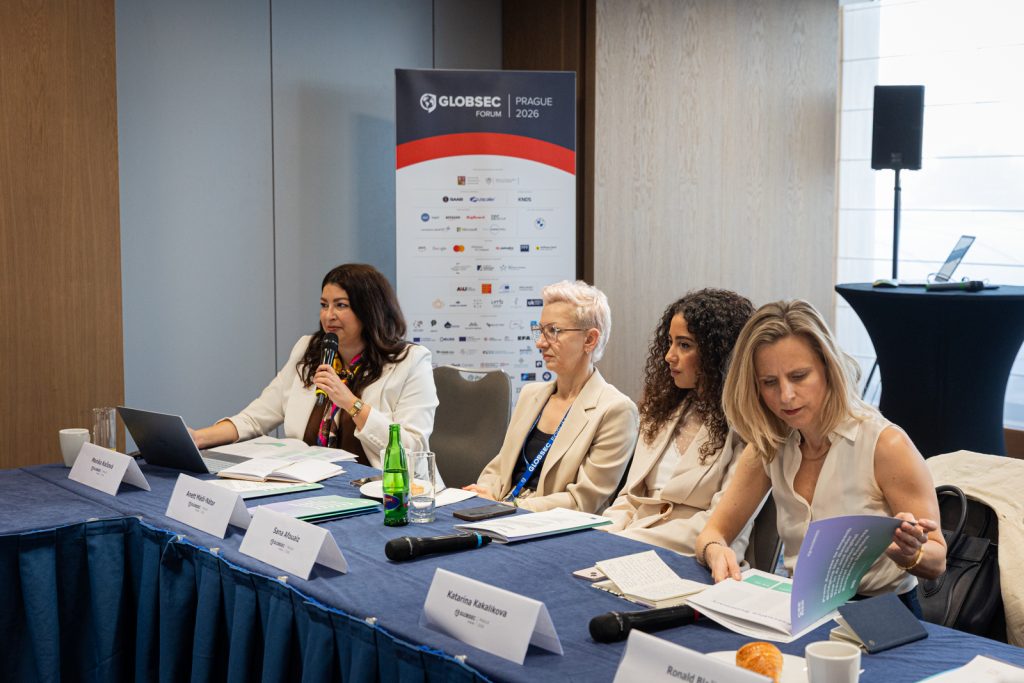
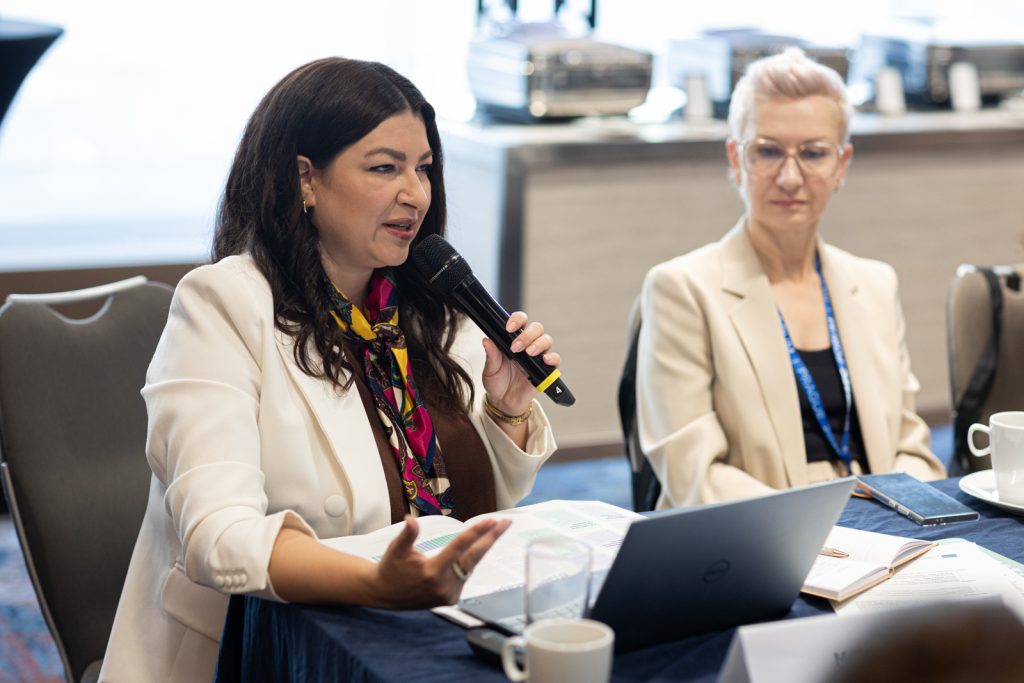
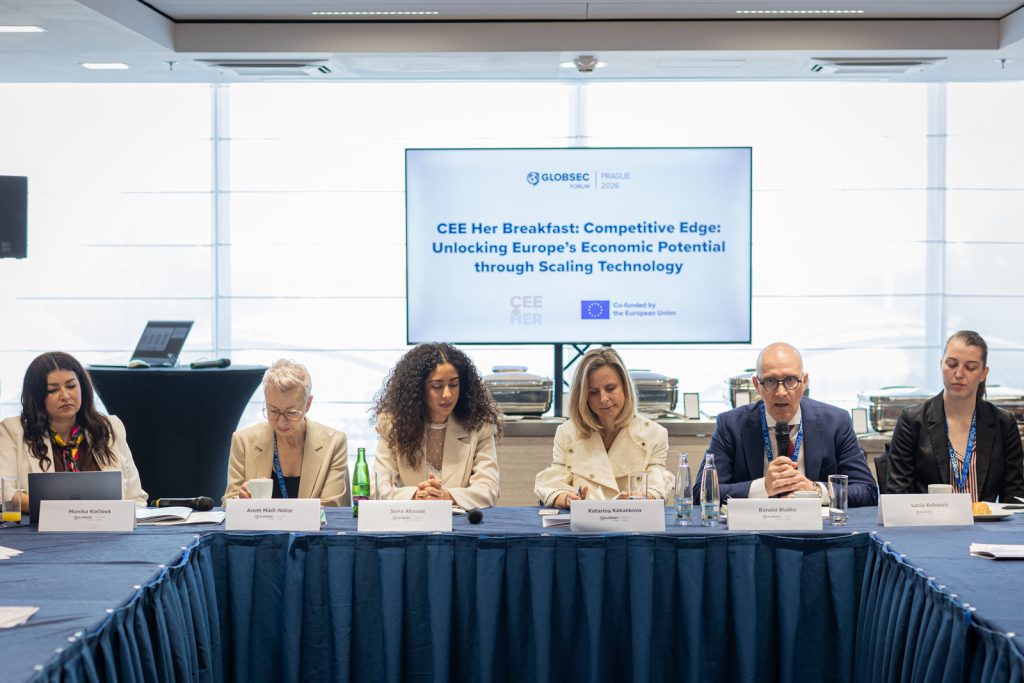
The CEE Her Breakfast roundtable, “The Competitive Edge: Scaling Tech Uptake and Unlocking the Economic Potential (Women Included),” brought together policymakers, business leaders, and experts to examine why inclusive digital transformation is an economic necessity, not merely a social goal. Moderated by Lucia Kobzová, the session also served as the launch platform for the CEE Her report From Access to Impact: Bridging the Gender Gap in AI and Digital Transformation across Central and Eastern European SMEs.
The conversion gap and the report
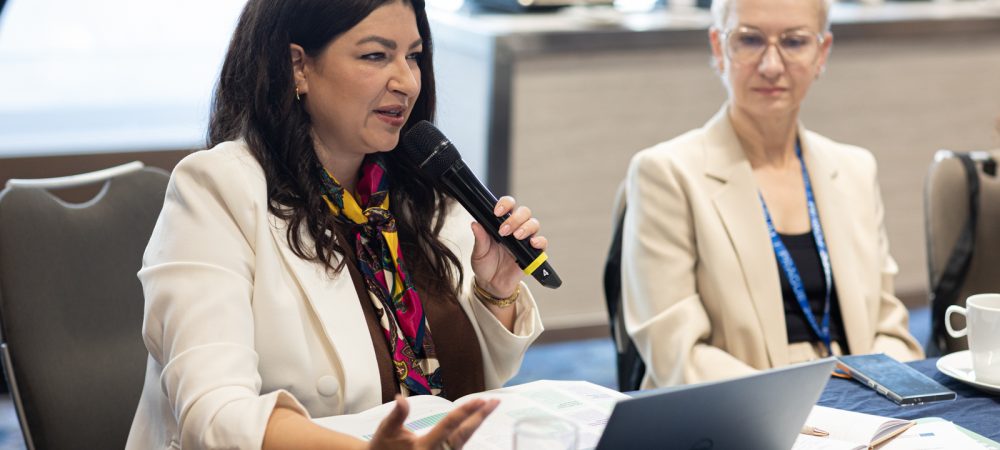
A central theme of the discussion was the conversion gap -the systemic inability of small and medium-sized enterprises, which represent 99% of all EU businesses, to translate access to digital tools into measurable productivity or strategic advantage. Report author Monika Kočiová presented eight core findings drawn from data across Austria, Bulgaria, Czechia, and Slovakia, painting a picture of both the scale of the problem and the opportunity at stake.
The findings are stark. Closing the gender gap in AI and digital transformation across CEE could unlock €146 billion in additional annual GDP by 2030 – yet women remain systematically excluded from the decision-making tables where AI and digital strategies are shaped, even as parallel women’s networks proliferate around them. Structural barriers compound this exclusion: time poverty, unequal care responsibilities, limited access to finance, and persistent confidence gaps continue to constrain women’s professional progress across the region. The rural-urban divide adds another layer, with innovation remaining concentrated in a handful of urban hubs while rural areas stay fragmented and economically isolated.
The report also identifies a narrow window of opportunity. AI, if governed well, could rebalance the playing field by placing greater value on creativity, strategy, and communication — areas where women can leverage existing expertise alongside technical skills — rather than rewarding only the technical profiles that have historically dominated the field.
Expert contributions
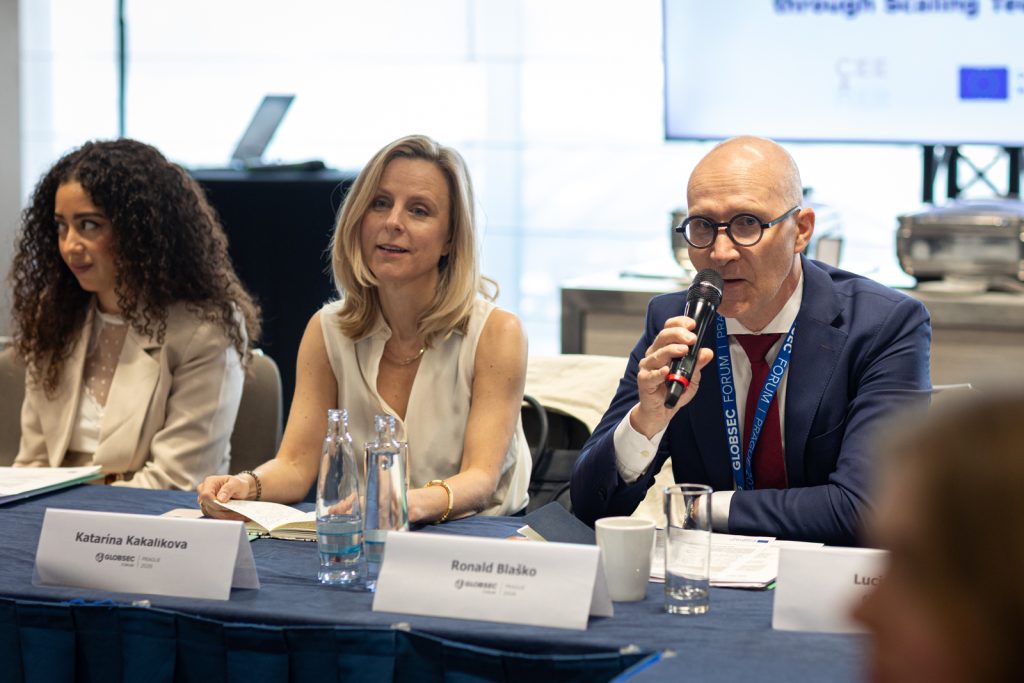
Ronald Blaško, Director of VAIA, observed the low presence of men at gender-focused forums and argued that gendered life trajectories are often predetermined at home, shaped by early socialisation — from the toys children are given to the ambitions they are encouraged to form.
Katarína Kakalíková of Mastercard critiqued the fragmented support ecosystem and the time scarcity facing small business owners. She highlighted that women typically become solo entrepreneurs roughly ten years later than men — most often between ages 31 and 45 — as a strategy for balancing family responsibilities with income. What these women need, she argued, is not abstract innovation but simple, practical tools that save time.
Sana Afouaiz of Womenpreneur argued that because around 90% of tech designers are men, technology is routinely built around male needs and bodies – from smartphones too large for women’s hands to clothing without functional pockets, forcing women to purchase additional accessories just to carry their devices. This is not a design inconvenience, she argued, but a form of economic discrimination. The solution is not adaptation but participation: women must move from being tech consumers to tech creators and co-designers.
Anett Mádi-Nátor of the Women4Cyber Foundation emphasised that tech adoption is a societal issue, not a technical one. She pointed to the gap between Europe’s strong policy frameworks and the absence of systemic financial mechanisms to support female inclusion in practice, and flagged the growing risk as US-origin funding for gender-inclusion initiatives recedes from the European landscape.
Key themes
The interactive closing session addressed three broader shifts. On workplace culture, participants including Hannah Va of the Embassy of Canada argued that rigid face-time office norms are structurally incompatible with genuine inclusion, and that flexibility is a competitive requirement, not a concession. On digital content and social norms, Martina Lab of MCM Slovakia and Anett Mádi-Nátor raised concerns about rising intolerance among younger men regarding women’s roles, potentially reinforced by unregulated consumption of violent and extreme digital content. On redefining success, the panel called for support structures that recognise community-focused entrepreneurship and long-term societal value — models that current frameworks, calibrated around high-scale venture capital, systematically undervalue.